Past Life Story
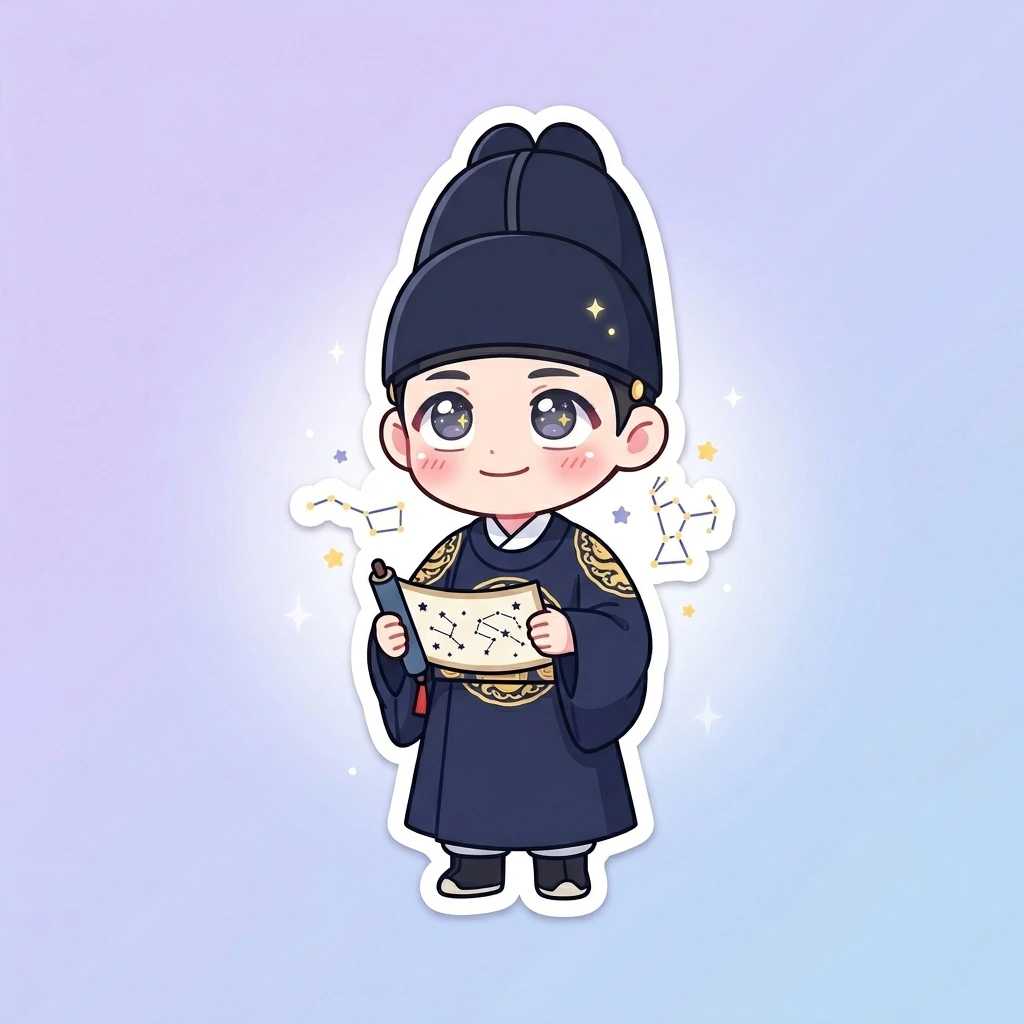
In the 23rd year of King Sejong, you were born into a jungin family at the end of Unjongga in Hanyang. Your father served as a clerk at the Gwansanggam, the royal observatory, and your mother was a woman who could read and loved the stars. From your earliest days, your sleeping place was the courtyard. Your mother would lay you upon her lap and teach you the constellations. By five, you knew the Big Dipper. By seven, you had memorized the twenty-eight lunar mansions. People called you a prodigy, but you only watched the stars because you loved the stars. In your mother's tales, the stars were alive. The bridge where Gyeonu and Jingnyeo met once a year, the seven stars of the Dipper that wheeled around the king—all of these were your first book. At thirteen, you entered the Gwansanggam as a student. There you learned for the first time that astronomy was not merely story. The movements of the stars made time. Time made agriculture. Agriculture sustained the people. That was the moment your shoulders first grew heavy. At twenty, you became a royal astronomer. Each night you climbed the observatory tower to read the heavens, and at dawn you reported the stars of that day to the king. Your writings reached the desk of the throne. Sejong was a king who loved the stars. He often summoned you to ask of celestial movements, and you answered with honesty. Around your thirtieth year, you took part in the making of the Jagyeongnu. The grand water clock by which all the hours of Hanyang were measured—into that great invention, your hand was added. When the time you had read from the heavens became the chime of the Jagyeongnu and rang through the capital, you bowed deeply once. To bind stars and people—that was your place. Yet the path of an astronomer was lonely. You spent more hours with stars than with people. The silence of the heavens was more familiar than human speech. There was one woman in your heart for all your life, but she could not understand a man who watched the stars. You never married. Only on the seventh day of the seventh month each year, looking up at Gyeonu and Jingnyeo, you would pour a single cup of wine. In your fortieth year, there came a solar eclipse. You predicted it with precision, and the king bestowed great reward upon you. Yet your heart was heavy. An eclipse was a heavenly portent, and it boded ill for the king. You knelt before him and explained the meaning of the heavens. The king praised your honesty. But you knew—how perilous the path of one who speaks the truth of the stars. In the autumn of your forty-fifth year, you climbed the tower as always to watch the heavens, and there you fell asleep. When a colleague came at dawn, your eyes were closed, but in your hand was a small slip of paper. Upon it, your final words were written: "The stars do not lie." Your death was reported to the king, who composed a brief eulogy in your memory. The records of the stars you had observed across a lifetime later became part of the Cheonmunryucho, a pillar that upheld the astronomy of Joseon. You lived with the stars, and with the stars you departed. Your soul may even now be quietly shining in some night sky. When someone looks up at that star, you fall again into their heart, becoming a star within them.