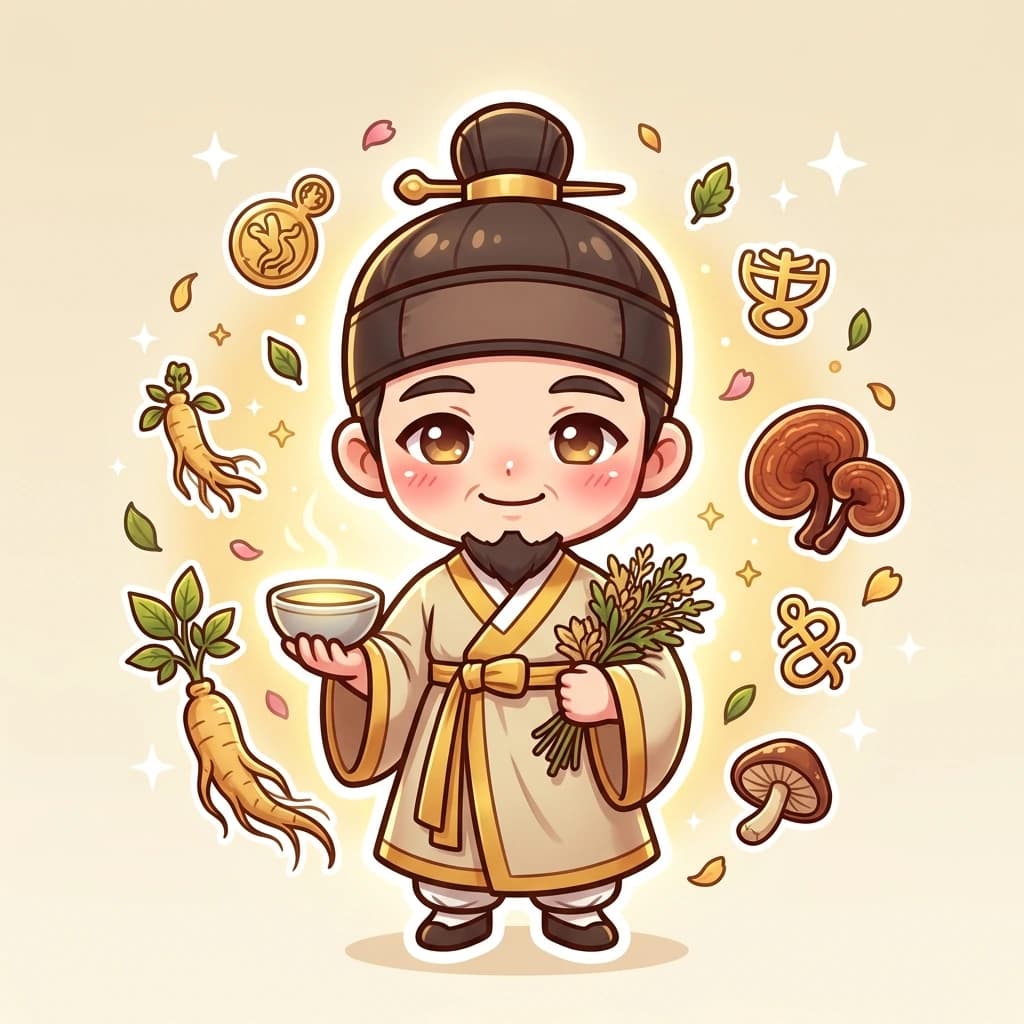
Past Life Story
In the fourteenth year of King Myeongjong, you were born the seoja, the secondary son, of a yangban family. Your father had a lawful wife, but your mother was a concubine. Because of your status you could not go where your will led from the moment of your birth. You were the child of yangban, yet not yangban; not even commoner. By five you learned letters, by ten you took interest in medical books. To one barred from the civil examination by status, the medical art was one means by which you might find your own path. You read medical books as if mad. The Yellow Emperor's Inner Classic, the Treatise on Cold Damage, the Compendium of Materia Medica—all of them. In your fifteenth year, you entered the disciple-line of a renowned physician. There you learned acupuncture and moxibustion, herbs and pulse-reading. Your master saw your talent at once. Yet at the same time he said, "A physician of great talent easily falls into his own talent. Beware of it." At twenty you began to practice your art. Of low status, you could not become an official physician at first, but among the people your name became known. You attended the poor with the same care as the wealthy. To those who could not pay for medicine, you gathered herbs yourself. With the fees you received from the wealthy you helped the poor. At thirty you at last became a physician at the court. By learning and skill you broke through the wall of status. There you began to attend the king's family. Yet you did not change. If a poor patient outside the palace gates sought you, you never once refused. In your fortieth year, the king entrusted you with a great mission. To organize all medical books and compile a new one. That later became the Donguibogam. You devoted ten years to that work. From dawn until night, volume after volume came from your hand. In your fiftieth year, the Imjin War broke out. When the king fled to Uiju, you went with him. Other physicians all fled, but you remained beside him to the end. That was your loyalty. But your true loyalty lay elsewhere. While in flight, you attended every patient you met along the road. Not only the king. In your sixtieth year, the king departed this world. You bore responsibility for the king's death and were exiled. Yet even in exile you wrote medical books. On the slopes of your place of exile, each day you gathered herbs, each day you wrote. The final part of the Donguibogam was completed in that place. In your sixty-third year, you were released from exile. For your book had at last reached the new king. The new king was struck with admiration upon seeing your work. You returned to Hanyang. But your body was already old. In your seventieth year, you did your last work. Compiling the Donguibogam into twenty-five volumes. It was not merely a medical book but a book on how a person must live to be healthy. You believed that medicine was not merely curing illness but enabling a person to live as a person. In an autumn of your seventy-sixth year, while attending a patient as always, you departed in your own herb shop. In your hand was held a final prescription. It was for one poor old mother. Your book—the Donguibogam—was later transmitted not only in Joseon but in Ming China and Japan. It became one of the peaks of East Asian medicine. It became a UNESCO Memory of the World. Yet you did not know your book would be such. You only wished to save patients. When you take the patient's pain as your own, only then are you a physician—that was the whole of your life. You were not a mere master physician. You were the embodiment of the art of benevolence. Your soul, even now somewhere, must be standing quietly beside a single sick person.